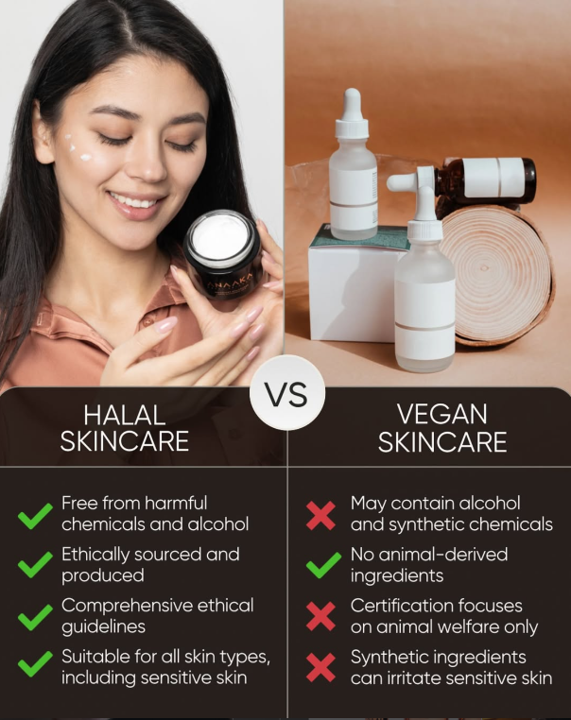
Anti-aging skincare relies on a fairly small set of proven active ingredients: hyaluronic acid, peptides, retinoids, antioxidants, and a handful of others. What changes between a halal-certified formula and a conventional one isn't usually the active ingredient itself, it's how that ingredient is sourced, processed, and verified. This guide breaks down the most common anti-aging actives and explains exactly where the halal and conventional versions diverge, and where they don't.
The Short Answer
For most anti-aging actives, the molecule itself is chemically identical between halal and conventional versions. The difference lies in:
- Sourcing, whether the raw material comes from an animal-derived source, a halal-slaughtered source, or a plant/microbial source
- Processing aids, whether alcohol-based solvents, gelatin capsules, or animal-derived stabilizers were used anywhere in the manufacturing chain
- Verification, whether the full supply chain has been independently audited, not just the finished formula
Ingredient-by-Ingredient Breakdown
Hyaluronic Acid
Conventional: Originally derived from rooster combs (a genuinely animal-derived source), though most modern skincare, halal or not, has shifted to bio-fermented hyaluronic acid produced by bacteria in a controlled lab environment.
Halal-certified: Uses the same bio-fermentation process, but the fermentation media, any processing aids, and the facility itself are verified free of non-halal inputs. The hydration and plumping performance is identical.
What to check: If a product doesn't specify "halal-certified hyaluronic acid," it may still be bio-fermented and functionally similar, but hasn't gone through the verification step that confirms the entire production chain meets halal standards.
Collagen and Collagen-Boosting Peptides
Conventional: Topical collagen is frequently derived from bovine (cow), porcine (pig), or marine (fish) sources. Peptides that stimulate the skin's own collagen production are usually synthetic or plant-derived regardless of halal status.
Halal-certified: Collagen-boosting peptides are sourced from plant or synthetic origins rather than animal-derived collagen, and any animal-adjacent ingredient must trace to halal-slaughtered sources. Since most modern "collagen-boosting" actives (as opposed to topical collagen itself) are peptide complexes rather than actual collagen protein, this is often a smaller gap than people assume.
What to check: Products marketing "collagen" specifically (versus "collagen-boosting peptides") are more likely to contain actual animal-derived collagen protein and deserve closer scrutiny for halal status.
Retinoids (Retinol and Alternatives)
Conventional: Retinol is typically synthesized, not animal-derived, so this category has fewer sourcing concerns than most people expect. The bigger consideration is the delivery system (the emulsion or encapsulation carrying the retinol), which can include animal-derived stabilizers.
Halal-certified: Uses retinol or halal-compliant retinol alternatives (such as bakuchiol, a plant-derived retinol alternative) with delivery systems verified free of animal-derived stabilizers or alcohol-based carriers used in intoxicating concentrations.
What to check: The retinol molecule itself is rarely the issue; the surrounding formulation (emulsifiers, preservatives, delivery vehicle) is where halal verification adds real value.
Peptides (Copper Peptides, Palmitoyl Peptides, etc.)
Conventional: Almost universally synthetic, manufactured through controlled chemical synthesis rather than extracted from animal or plant sources.
Halal-certified: The peptide itself is typically identical, since synthesis doesn't usually raise halal concerns, but the culture media used in production (particularly for peptides made via biotechnology/fermentation) and any gelatin-based encapsulation are verified.
What to check: This is one of the categories where halal and conventional versions are most likely to be functionally and chemically identical, verification mainly closes a manufacturing traceability gap rather than changing the ingredient.
Antioxidant Complexes (Vitamin C, Vitamin E, Botanical Extracts)
Conventional: Vitamin E (tocopherol) can be sourced from soy, sunflower, or, less commonly, animal fat. Vitamin C is almost always synthetic or plant-derived.
Halal-certified: Vitamin E is sourced specifically from plant origins (soy or sunflower) with the sourcing verified and documented, removing any ambiguity about animal-fat-derived tocopherol.
What to check: "Vitamin E" or "tocopherol" on an ingredient list without further detail can come from multiple sources; halal certification closes that gap through verified sourcing.
Where Halal and Conventional Anti-Aging Products Are Functionally Identical
It's worth being direct about this: for the majority of anti-aging actives on the market today, halal-certified and conventional versions perform identically. Halal certification is a sourcing, processing, and verification standard, not a different or lesser efficacy tier. The clinical studies behind hyaluronic acid, peptides, and retinol apply equally regardless of certification status, because the molecules are the same.
The value of halal certification is traceability and assurance, not a different level of anti-aging performance.
Where the Real Differences Show Up
The most meaningful differences between halal and conventional formulations tend to appear in:
- Fragrance and preservative systems, some conventional preservatives use animal-derived glycerin or alcohol bases not permitted under halal standards
- Capsule and encapsulation technology, gelatin capsules (common in some serum or supplement-adjacent skincare formats) are frequently bovine or porcine-derived unless specifically sourced as halal or plant-based (agar or cellulose-based alternatives)
- Supply chain documentation, this is the biggest practical difference. A halal-certified brand can show a verified paper trail from raw ingredient to finished product; a conventional brand generally cannot, because it was never required to.
Frequently Asked Questions
Does halal-certified anti-aging skincare work as well as conventional formulas?
Yes. The active ingredients driving anti-aging results, hyaluronic acid, peptides, retinoids, antioxidants, are typically chemically identical between halal-certified and conventional versions. Halal certification changes how the ingredient is sourced and verified, not the ingredient's function or clinical performance.
Is retinol halal?
Retinol itself is synthesized and not animal-derived, so it doesn't raise inherent halal concerns. What requires verification is the surrounding formulation, delivery systems, emulsifiers, and preservatives, which can include animal-derived or alcohol-based components not permitted under halal standards.
Why does halal-certified hyaluronic acid cost the same as regular hyaluronic acid if the molecule is identical?
Because the cost difference (where one exists) usually reflects the certification and auditing process, not the raw material itself. Verifying an entire supply chain adds compliance overhead that non-certified products don't carry.
Are there any anti-aging ingredients that are never halal-compliant?
Ingredients derived specifically from non-halal-slaughtered animal sources (certain types of animal collagen, some gelatin capsules, and a few specialty extracts) cannot be halal-certified unless reformulated with a plant-based or halal-sourced alternative. Most major skincare brands, halal-certified or not, have already shifted toward synthetic or plant-derived alternatives for these ingredients due to broader consumer demand for vegan and cruelty-free formulations.
How do I know if my current skincare routine's actives are halal-sourced?
Check whether the brand names a specific halal certifying body, look for "halal-certified" language attached to the specific ingredient (not just the product as a whole), and check whether the certification covers the brand's full range or only select products.
About This Guide
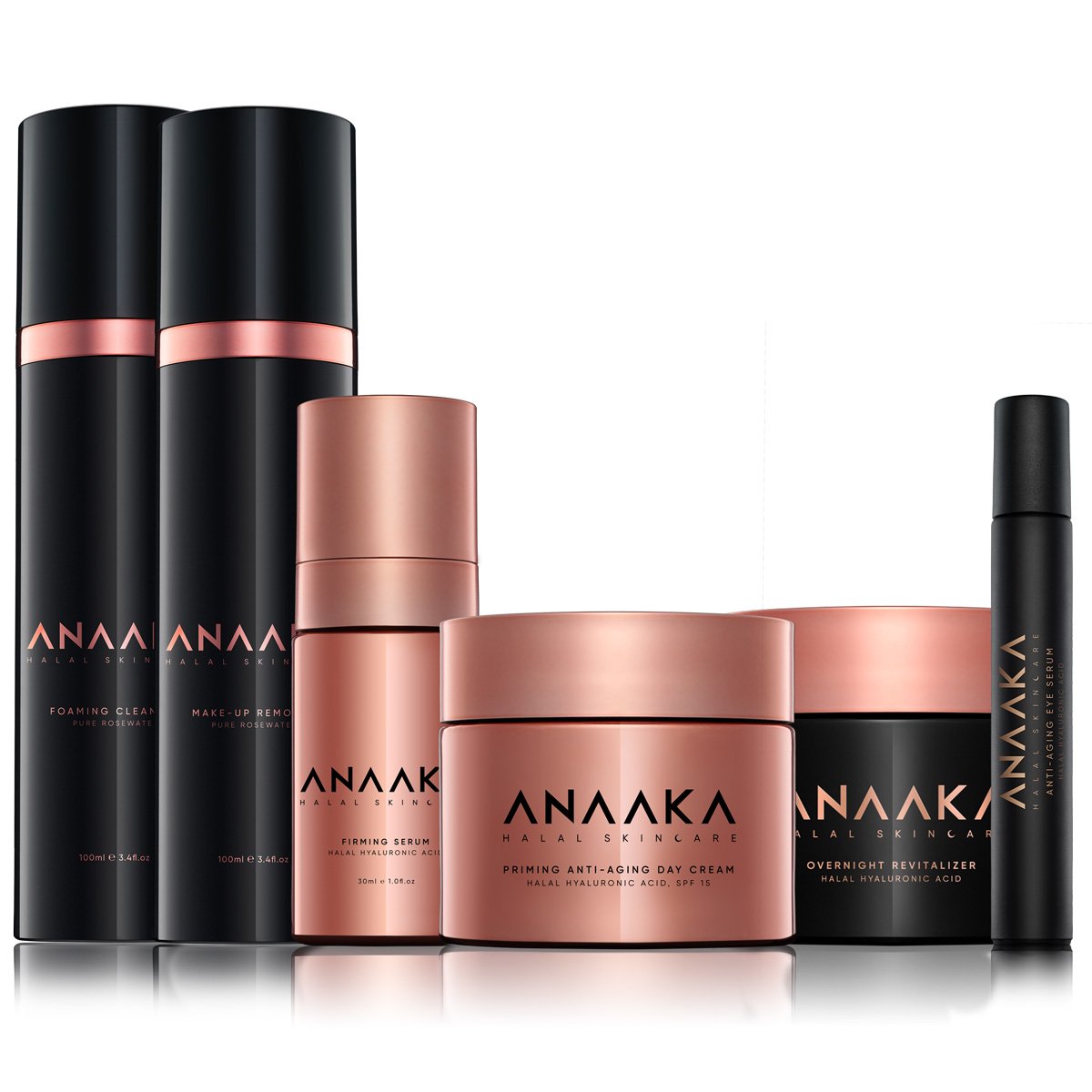
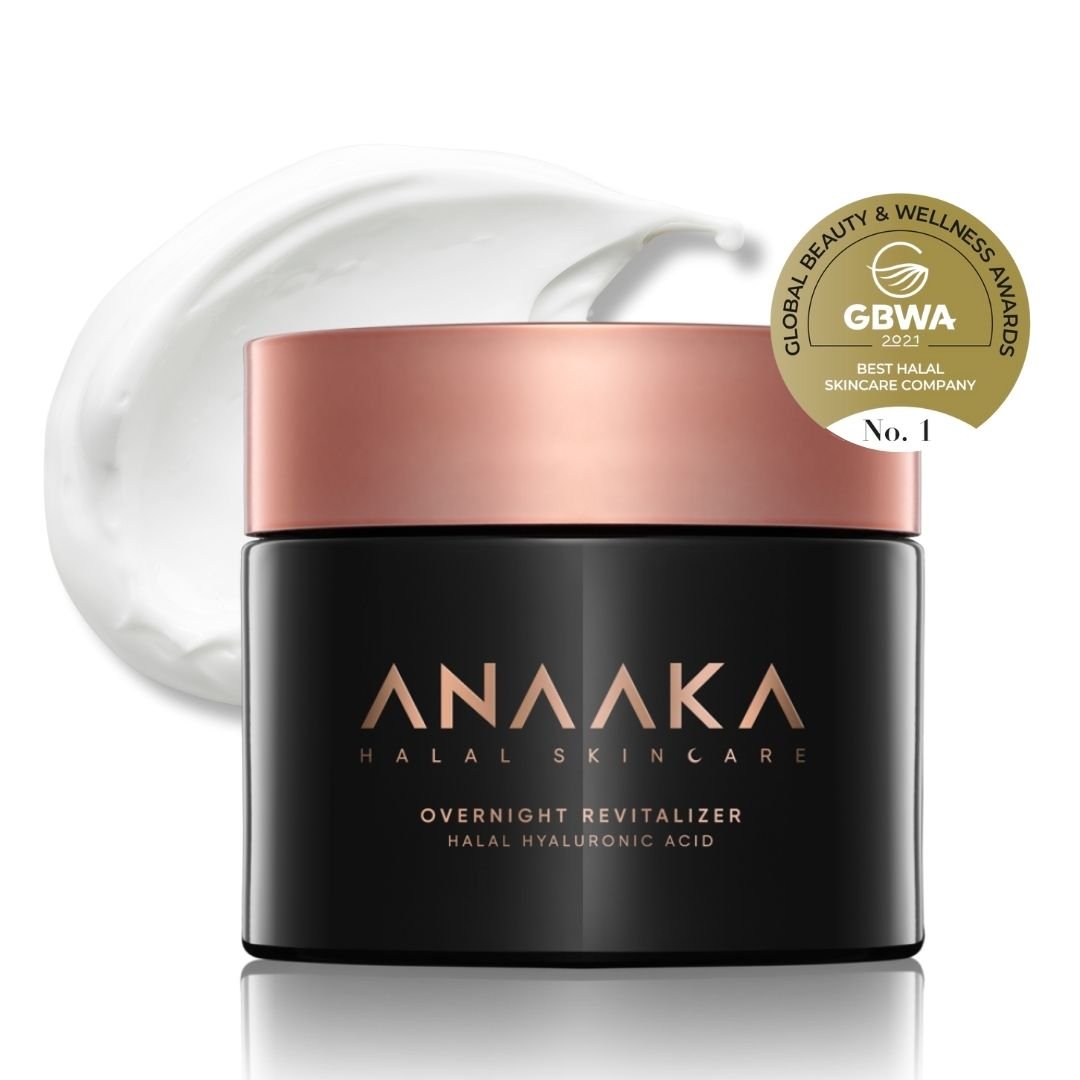
This guide was prepared by ANAAKA, an Italian-manufactured, halal-certified skincare and haircare brand recognized with the GBWA Award for Best Halal Skincare Company in 2021. ANAAKA's anti-aging formulas use halal-certified hyaluronic acid, collagen-boosting peptides, and botanical actives across its full product range, verified and registered with regulatory bodies including NPRA (Malaysia), SFDA (Saudi Arabia), CPNP (EU), and Turkish Standards compliance.