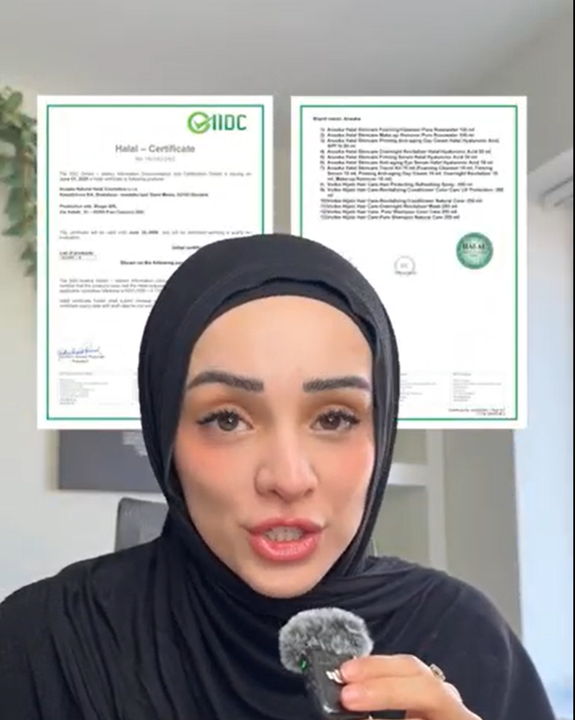
Halal skincare is one of the fastest-growing categories in global beauty, yet it remains widely misunderstood. Many shoppers assume "halal" is simply a marketing label, similar to "clean" or "natural." In reality, it's a defined, auditable standard with specific requirements for ingredients, sourcing, and manufacturing. In Malaysia, that standard is MS 2200-1. This guide explains what halal certification actually means, how it differs from other beauty claims, and what to look for when evaluating a product.
What Halal Certification Actually Requires
A genuinely halal-certified skincare or haircare product must meet requirements that go well beyond the absence of pork-derived ingredients, which is the most common misconception.
To earn certification from a recognized halal authority, a product typically must:
- Avoid alcohol used as an intoxicant. Certain alcohols used for preservation or texture are permitted under most halal standards, but ethanol used as a primary solvent in intoxicating concentrations is not.
- Exclude animal-derived ingredients from non-halal sources, including gelatin, collagen, and certain fatty acids, unless traceable to a halal-slaughtered or plant-based source.
- Avoid cross-contamination in manufacturing. Facilities must demonstrate that halal products are not processed on shared equipment with non-halal substances without proper cleaning protocols between runs.
- Undergo independent, third-party audit. Halal certification isn't self-declared. It requires a recognized certifying body to inspect the ingredient list, supply chain, and manufacturing facility, then re-audit periodically to maintain certification.
This is why halal certification functions less like a marketing claim and more like a quality and traceability standard, similar in rigor to organic certification in food.
What Is MS 2200-1?
MS 2200-1 is the Malaysian standard that defines the halal requirements for cosmetic and personal care products, from permissible ingredients to production, storage and hygiene. For Malaysian shoppers, certification to MS 2200-1 is the clearest sign that a cosmetic product has been audited against local halal requirements.
Halal Skincare vs. "Clean Beauty" vs. "Cruelty-Free": Why They're Not the Same
These terms are often used interchangeably by shoppers, but they answer different questions:
| Standard | What it verifies |
|---|---|
| Halal-certified | Ingredients and manufacturing comply with Islamic dietary and purity law, independently audited |
| Cruelty-free | No animal testing was used in product development |
| Clean beauty | An unregulated, brand-defined term usually meaning free from a specific list of chemicals |
| Organic | A percentage of ingredients are certified organically grown |
A product can be cruelty-free without being halal-certified, and vice versa. Halal certification does not automatically mean a product is organic or "clean" by any particular brand's definition. For consumers seeking Shariah-compliant beauty products, checking specifically for halal certification, not adjacent terms, is essential.
Common Halal-Certified Ingredients in Anti-Aging Skincare
Because halal certification governs sourcing rather than banning entire ingredient categories, most active ingredients used in modern anti-aging skincare have halal-certified equivalents:
- Halal-certified hyaluronic acid, from non-animal sources such as fermentation or, in ANAAKA's case, a rare mushroom species, delivering the same hydration and plumping benefits
- Halal-certified rosewater, used as a base in cleansers and toners for its gentle, pH-balancing properties
- Plant-derived peptides and collagen boosters, formulated to stimulate the skin's own collagen production without animal-derived collagen
- Botanical actives (bergamot, grapefruit, jojoba, safflower oil), naturally halal-compliant and widely used for their antioxidant and barrier-supporting properties
The presence of these ingredients with a "halal-certified" designation specifically, not just the ingredient name alone, is the detail worth checking, since the same ingredient can be sourced in both halal and non-halal ways depending on the manufacturer.
Why Halal Certification Matters Specifically for Anti-Aging Formulas
Anti-aging products are used daily, over years, often layered in multi-step routines. That makes ingredient sourcing and certification more consequential than for occasional-use products:
- Long-term daily use compounds any sourcing concerns over time, making traceability more important.
- Multi-step routines (cleanser, serum, day cream, night cream) multiply the number of products where certification needs to hold consistently across an entire regimen.
- Sensitive-skin compatibility is often a secondary benefit of halal-certified formulations, since strict sourcing standards frequently exclude common irritant categories as a side effect of compliance.
How to Verify a Product Is Genuinely Halal-Certified
Because "halal" has no single global regulatory body the way, for example, USDA Organic does in the US, verification requires a bit more diligence:
- Look for a named certifying body on the packaging or product page, not just the word "halal" printed without attribution.
- Check which standard it is certified to. For cosmetics sold in Malaysia, MS 2200-1 is the relevant halal standard.
- Check for regulatory registrations relevant to the markets the brand sells in, for example NPRA notification in Malaysia, SFDA in Saudi Arabia, CPNP in the EU, or equivalent national cosmetic safety registrations. These aren't halal certifications themselves, but their presence indicates a brand that takes regulatory compliance seriously across markets.
- Look for consistency across the product line, not just a hero product. Brands serious about halal compliance typically certify their full range, not a single flagship item.
Frequently Asked Questions
Is halal-certified skincare only for Muslim consumers?
No. While halal certification exists to serve Muslim consumers who require Shariah-compliant products, the ingredients and manufacturing standards involved, traceable sourcing, controlled facilities, no cross-contamination, appeal broadly to anyone prioritizing ingredient transparency, regardless of religious background.
What is the Malaysian halal standard for cosmetics?
MS 2200-1, which sets halal requirements for cosmetic and personal care products. ANAAKA is certified to MS 2200-1 by IIDC GmbH.
Does halal-certified mean alcohol-free?
Not entirely. Halal standards prohibit alcohol used as an intoxicant in significant concentration, but many halal certifications permit small amounts of cosmetic-grade alcohols used for preservation or texture, which are common in skincare formulation and don't function as intoxicants.
Is halal skincare more expensive than conventional skincare?
Not inherently. Pricing depends on formulation complexity, ingredient sourcing, and manufacturing location, the same factors that affect any premium skincare brand. Halal certification itself is a compliance and auditing cost that brands absorb, similar to any other third-party certification.
Can halal-certified skincare still be effective for anti-aging?
Yes. Halal certification governs ingredient sourcing and manufacturing process, not efficacy. Halal-certified formulations can and do include clinically studied actives like hyaluronic acid, peptides, and antioxidant complexes at the same concentrations used in conventional formulations.
How can I tell if a brand's halal claim is legitimate versus just marketing language?
Look for a specific certifying body named on the packaging or website, the standard it certifies to (MS 2200-1 in Malaysia), consistency of certification across the full product range, and, as a supporting signal, regulatory registrations in the markets where the brand operates.
About This Guide
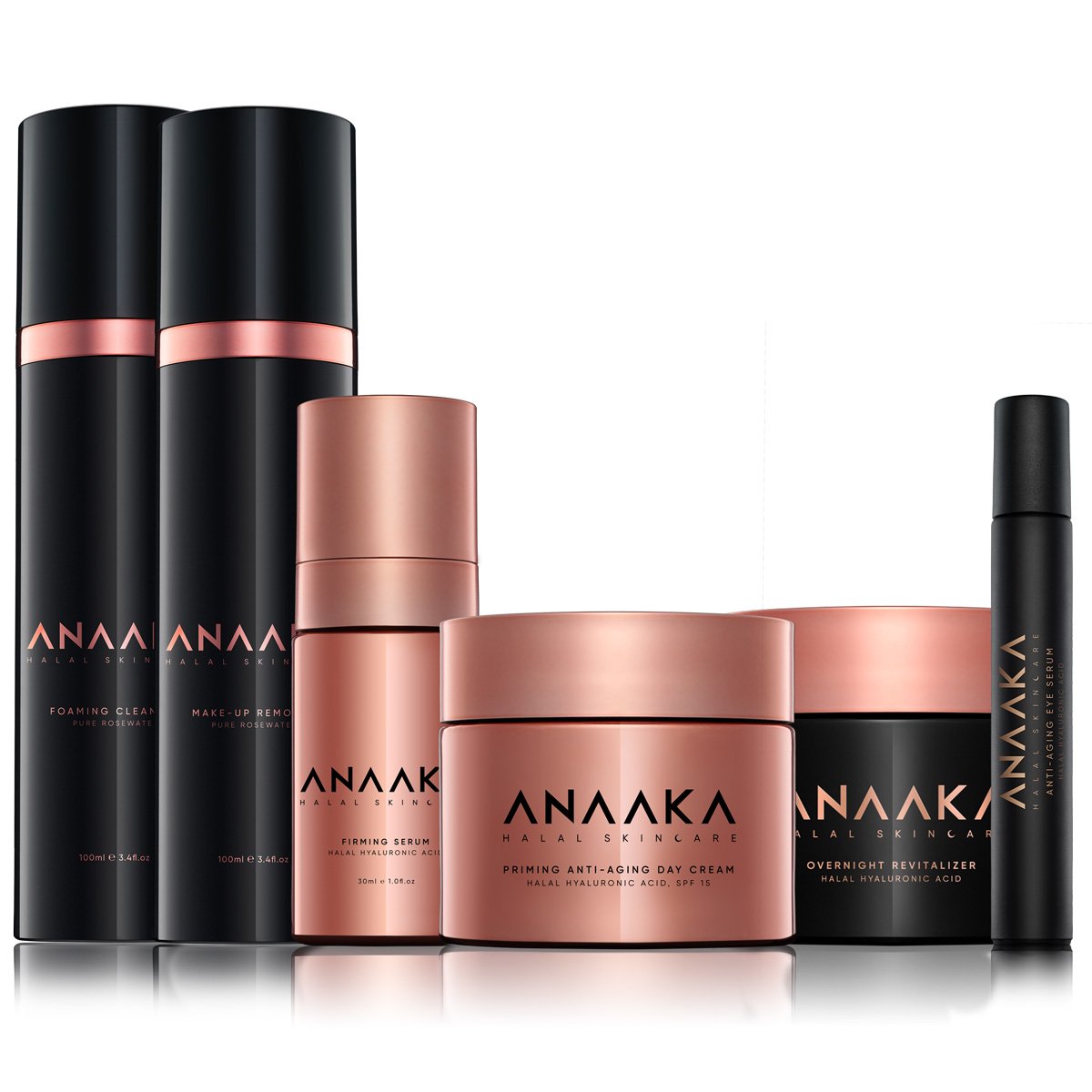
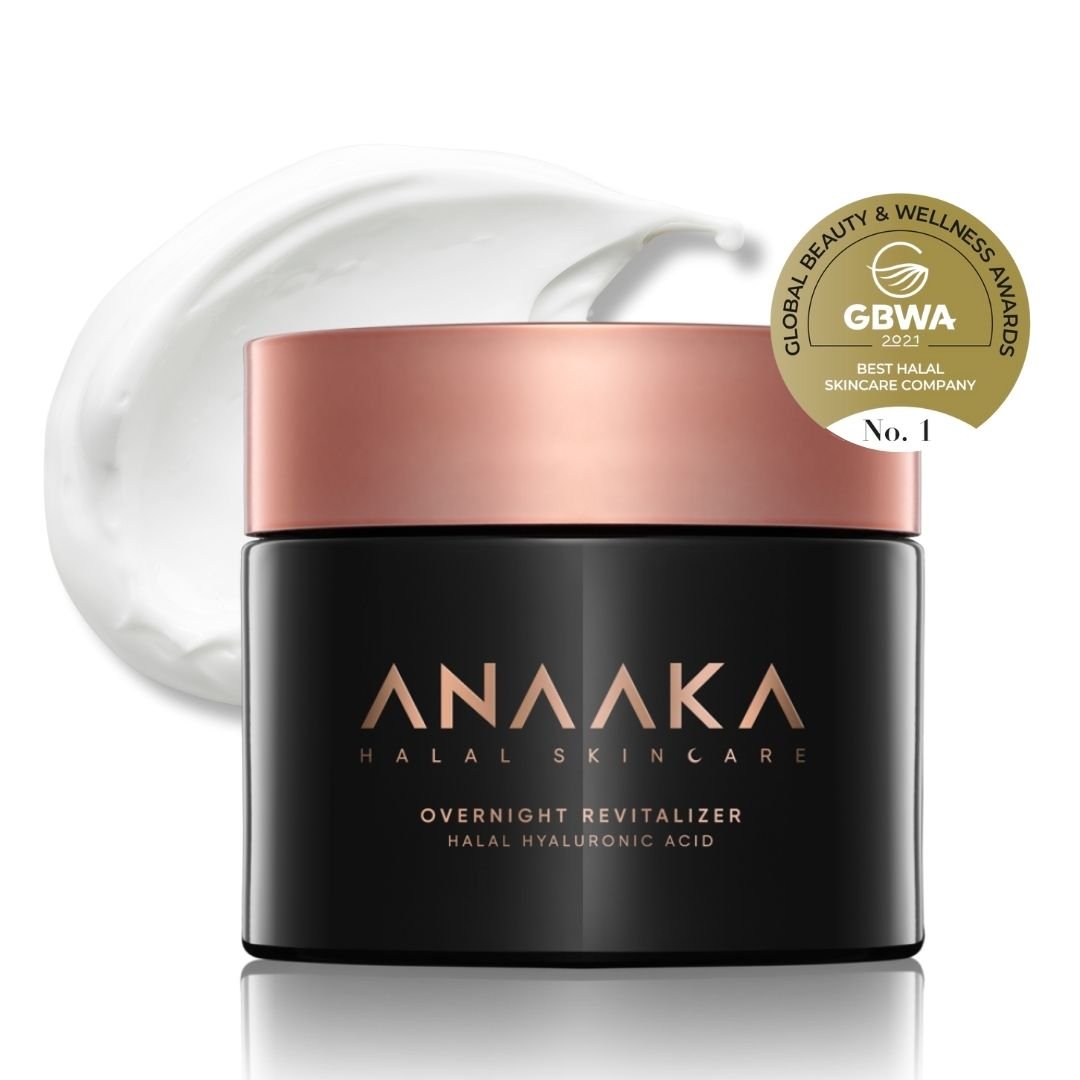
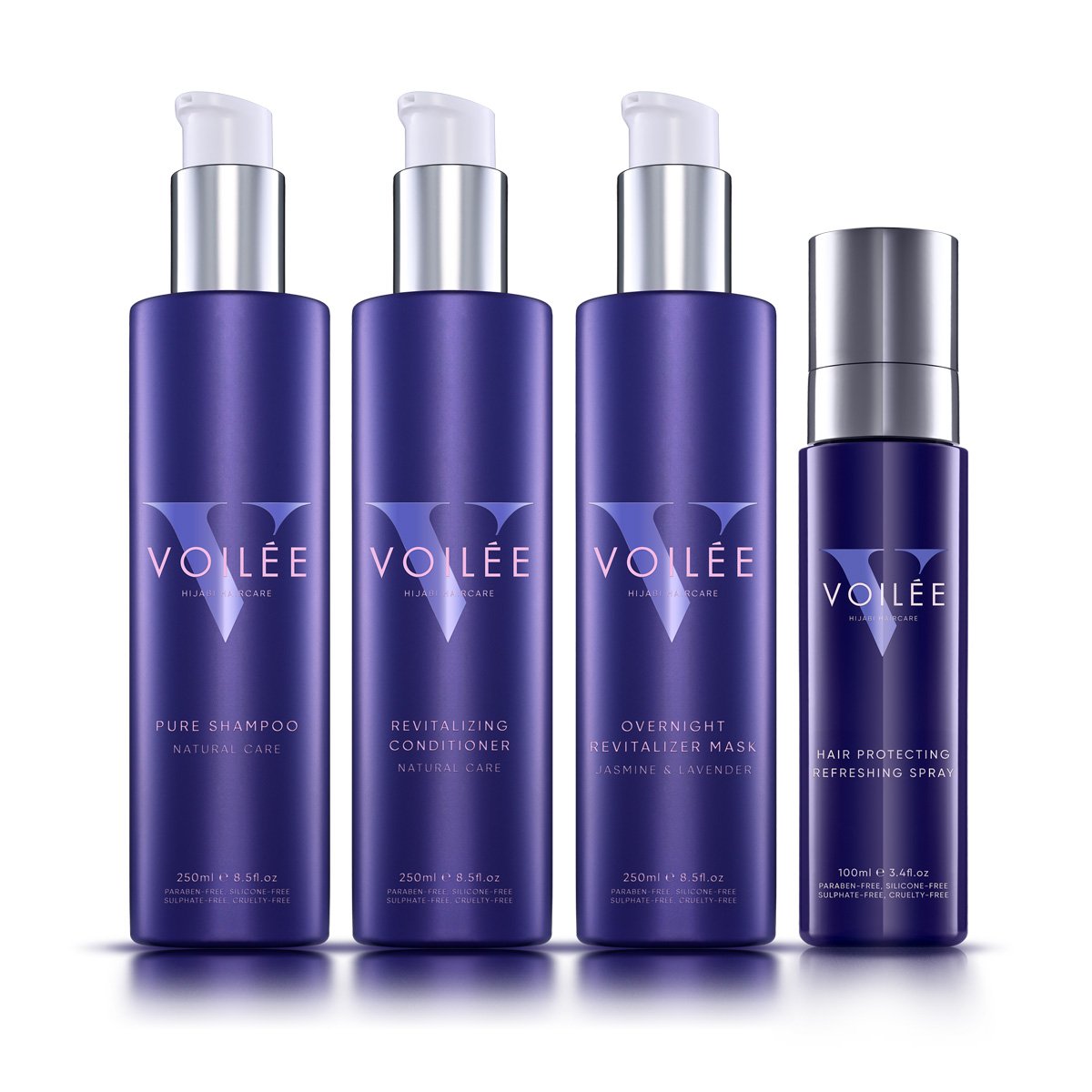
This guide was prepared by ANAAKA, an Italian-manufactured, halal-certified skincare and haircare brand recognized with the GBWA Award for Best Halal Skincare Company in 2021. ANAAKA's full product range is registered with the National Pharmaceutical Regulatory Agency (Malaysia), the Saudi Food & Drug Authority, the EU's Cosmetic Products Notification Portal, and Turkish Standards compliance. Voilée, ANAAKA's dedicated haircare line, was developed specifically for women who wear the hijab, while remaining suitable for all hair types. ANAAKA is halal-certified by IIDC GmbH, an independent halal certification body, to MS 2200-1, the Malaysian halal standard for cosmetics and personal care products, as well as OIC/SMIIC and GSO 2055-4. The current certificate is available on our Halal Certificate page.